


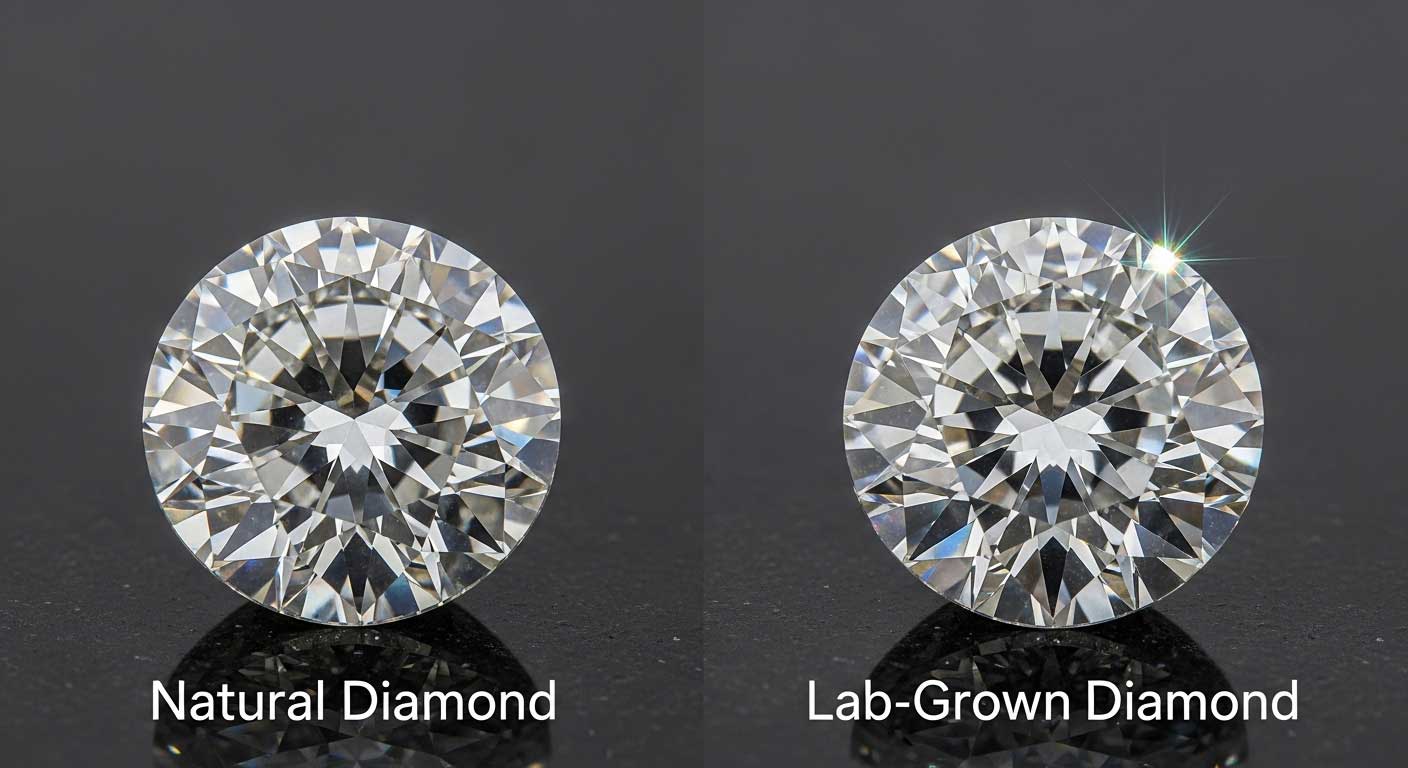
The Ultimate Diamond Debate: Natural vs. Lab-Grown at Grimal Jewelry
Natural vs. Lab-Grown Diamonds: A Connoisseur’s Guide to Origin, Value, and Legacy
For over a decade, Grimal Jewelry has been the definitive source for bespoke luxury, from masterfully crafted Cuban Links to exclusive Rolex timepieces. We understand that our clientele demands not just excellence, but expert knowledge.
The introduction of lab-grown diamonds (LGDs) has sparked a necessary conversation in the world of fine jewelry. Our goal is to provide a definitive comparison between natural vs. lab-grown diamonds to help you make an informed choice. While they are chemically identical to their mined counterparts, their difference in origin and value proposition is monumental. Understanding Natural vs. Lab-Grown Diamonds is the first step toward a confident purchase.
Here is Grimal Jewelry’s definitive guide to help you decide which diamond aligns best with your investment, values, and personal legacy.
VISIT OUR DIAMOND JEWELRY COLLECTION
1. The Tale of Origin: Billions of Years vs. A Few Weeks
The fundamental difference between these two gems lies in their creation story, a distinction that defines their perceived value and rarity.
The Natural Diamond (The Earth’s Masterpiece)
- Origin: Formed up to 100 miles beneath the Earth’s surface over one to three billion years. They are created by immense heat and pressure, carried to the surface by deep-seated volcanic eruptions. This incredible geological journey imbues each stone with an irreplaceable sense of history.
- Rarity & Uniqueness: A natural diamond is a non-renewable, finite resource. Every mined diamond carries unique crystalline imperfections that serve as a natural fingerprint. No two natural diamonds are exactly alike, embodying true exclusivity and geological history. The rarity is not simply a marketing tool; it is a fact of nature.
- Symbolism: Since ancient times, natural diamonds have symbolized eternal love, permanence, and enduring strength—a powerful symbol derived from a billion-year journey. They connect the wearer to an ancient, magnificent process.
The Lab-Grown Diamond (The Modern Marvel)
- Origin: Created in a controlled laboratory environment over a period of a few weeks. The two main methods—HPHT (High-Pressure High-Temperature) and CVD (Chemical Vapor Deposition)—both accelerate the natural growth process.
- Purity & Uniformity: Because they are grown in a pristine, controlled setting, LGDs often exhibit fewer impurities and can achieve higher clarity and color grades more consistently than mined diamonds. The lack of the “fingerprint” imperfections is a defining trait of the lab-grown diamond.
- Symbolism: Lab-Grown Diamonds represent innovation, modernity, and a different set of values, often appealing to buyers prioritizing budget flexibility and traceable origins. They are a testament to human ingenuity.
2. The Critical Comparison: Price, Rarity, and Resale Value of Natural and Lab-Grown Diamonds
While both diamonds are chemically identical carbon crystals, they diverge significantly when measured as a luxury asset and as a store of value.
| Feature | Natural Diamond | Lab-Grown Diamond |
| Rarity | Finite Resource. Rarity is inherent due to geological time and scarcity. | Infinite Resource. Easily replicable and mass-produced in a factory setting. |
| Initial Price | Higher, reflecting the cost of mining, rarity, and a robust supply chain. | Significantly Lower (often 50% to 70% less than a natural diamond of equal 4Cs). |
| Legacy & Investment | Retains value over time due to rarity; often cherished as heirlooms and long-term assets. | Low Resale Value. Often lose a significant percentage of their value immediately upon purchase, similar to most manufactured goods. |
| Environmental & Ethical Footprint | Subject to the Kimberley Process for conflict-free sourcing. | Usually boasts a transparent, guaranteed conflict-free origin. |
The Resale Value Factor: Asset vs. Appliance
One of the most important considerations for Grimal Jewelry clients is the distinction between an asset and a manufactured product. A natural diamond, given its rarity and non-renewable status, holds a far better position as a tangible asset that retains a percentage of its value over time.
A lab-grown diamond, while beautiful, is a manufactured good. Like any technology, the cost of production (and therefore the price) continues to fall as manufacturing becomes more efficient. This means the long-term value of a lab diamond is significantly lower than its initial purchase price, a critical factor when analyzing Natural vs. Lab-Grown Diamonds for investment.
Ethical and Environmental Considerations
While some criticize the environmental impact of mining, the industry has made vast improvements in sustainability and ethical sourcing through programs like the Kimberley Process. Conversely, the environmental impact of a lab-grown diamond depends entirely on the energy source used by the lab—a diamond grown using solar power is far different from one grown using a coal-powered grid. We encourage all clients to inquire about the specific ethical and sustainability certifications for their stone of choice, regardless of whether they choose natural vs. lab-grown diamonds.
3. The Grimal Perspective: Choosing Your Investment
At Grimal Jewelry, we honor the preferences of every client. Our role is to provide the transparency and expertise needed to guide your decision.
Choose a Natural Diamond If:
- Your Priority is Legacy: You want a rare, non-renewable asset to be passed down through generations. The mined diamond stands alone as a truly finite resource with an enduring story.
- Your Priority is Investment: You are focused on the long-term holding value and market stability. The natural diamond’s rarity shields its worth from the volatility of mass manufacturing.
Choose a Lab-Grown Diamond If:
- Your Priority is Size/Budget: You want the largest possible carat weight for your budget without compromising on the 4Cs (Cut, Color, Clarity, Carat).
- Your Priority is Modernity: You appreciate the innovation of modern science and the traceable, lab-controlled origins of the lab-grown diamond.
The Grimal Commitment to Certification
Regardless of your choice, we ensure authenticity. Every diamond sold by Grimal Jewelry is accompanied by certification from a leading, independent gemological laboratory (such as GIA or IGI), detailing its characteristics and, critically, its origin. The final decision between natural vs. lab-grown diamonds rests entirely on your personal priorities.
H2: Ready to Begin Your Diamond Journey in Miami?
Visit our Miami showroom or contact our master jewelers today to explore our exclusive collection of natural diamonds, certified lab-grown stones, and unique custom designs. We are here to ensure your choice, whether natural vs. lab-grown diamond, is made with confidence and clarity.